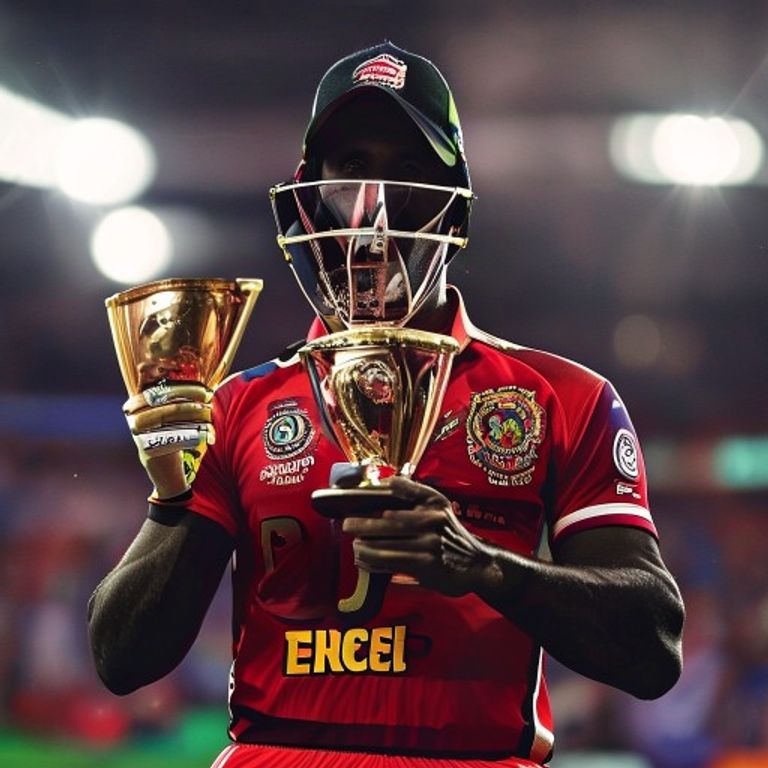
The Unbearable Lightness of Being RCB: Deconstructing the IPL’s Most Enduring Mystery
There’s a certain magic that surrounds the Indian Premier League (IPL). It’s a carnival of cricket, a spectacle of sixes, and a crucible of high-octane drama. Yet, amidst the glittering trophies held aloft by Mumbai Indians, Chennai Super Kings, and Kolkata Knight Riders, one franchise stands out, not for its victories, but for its perplexing, almost mythical, inability to cross the finish line: the Royal Challengers Bangalore (RCB). For over a decade and a half, the sea of red at Chinnaswamy has roared with unparalleled passion, witnessed cricketing gods perform miracles, and yet, the coveted IPL trophy has remained an elusive phantom. This isn’t just a statistical anomaly; it’s a deep, philosophical question that plagues fans, pundits, and perhaps even the players themselves: Is there an RCB IPL curse?
It’s a question that transcends mere wins and losses. It delves into the very fabric of team dynamics, strategic blunders, mental fortitude, and perhaps, a touch of cosmic irony. How can a team that consistently boasts some of the greatest T20 cricketers of all time – Virat Kohli, AB de Villiers, Chris Gayle, Glenn Maxwell, Faf du Plessis – repeatedly fall short? How does a franchise with arguably the most passionate and loyal fanbase, year after year, experience the agony of ‘almost’? This blog post isn’t just a lament; it’s an in-depth exploration, a forensic analysis, and a human expert’s attempt to unravel the unsolved mystery of RCB’s IPL trophy drought.
The Glamour Quotient vs. The Empty Trophy Cabinet: A Stark Paradox
Let’s face it: RCB IPL is synonymous with glamour. From their vibrant red and gold jerseys to their home ground, the M. Chinnaswamy Stadium, which transforms into a pulsating cauldron of noise, everything about RCB screams ‘superstar’. They’ve consistently attracted marquee players, global icons who could single-handedly turn matches. Think of the ‘Gayle-storm’ of 2011-2016, AB de Villiers’ superhuman antics, or Virat Kohli’s relentless run-scoring prowess, particularly his record-breaking 2016 season. These are not just great players; they are legends who have redefined T20 cricket.
And yet, for all the individual brilliance, for all the breathtaking moments of individual genius that have etched themselves into IPL folklore, the team trophy cabinet remains stubbornly bare. It’s a paradox that defies conventional cricketing logic. In a format often dictated by moments of individual brilliance, how does a team with so many moments of individual brilliance fail to coalesce into a championship-winning unit? The narrative of RCB’s IPL journey is one of exhilarating highs followed by soul-crushing lows, a cycle that has left its faithful supporters oscillating between fervent hope and profound despair.
A Walk Through History: The Agony of the Near Misses
To understand the depth of the ‘curse,’ we must revisit RCB’s IPL history, which is littered with the ghosts of opportunities lost. It’s not as if they haven’t come close; they’ve reached the final three times, in 2009, 2011, and 2016, each time falling at the final hurdle.
-
IPL 2009: The Deccan Chargers Defeat
In the second season, held in South Africa, RCB, under the captaincy of Anil Kumble, reached the final against Adam Gilchrist’s Deccan Chargers. It was a low-scoring thriller, and despite Kumble’s heroic spell of 4/16, RCB fell short by just six runs. The pain of that loss, especially after a stellar bowling performance, set a precedent for future heartbreaks. It was the first time RCB IPL fans tasted the bitter pill of a final defeat. -
IPL 2011: The CSK Dominance
Two years later, with a more formidable batting lineup featuring Chris Gayle, Virat Kohli, and AB de Villiers, RCB topped the league stage. They faced their arch-rivals, Chennai Super Kings, in the final. Chasing a mammoth 206, RCB’s chase never truly took off, and they lost by a significant margin of 58 runs. While CSK were a dominant force, the inability of RCB’s star-studded batting to fire on the biggest stage was a concerning sign for the RCB IPL faithful. -
IPL 2016: The Virat Kohli Masterclass and the SRH Heartbreak
This season is perhaps the most painful memory for any RCB IPL fan. Virat Kohli was in god-mode, scoring an unprecedented 973 runs with four centuries. With Gayle, De Villiers, and Shane Watson also firing, RCB looked unstoppable, especially at home. They reached the final against Sunrisers Hyderabad. SRH posted a formidable 208. The chase started brilliantly with Gayle and Kohli putting on a century stand. But then, the infamous collapse occurred. From a commanding position, RCB crumbled, losing by just eight runs. The image of a crestfallen Kohli, despite his superhuman efforts, epitomized the ‘curse’. It felt like if they couldn’t win it that year, they might never.
These near misses aren’t just statistics; they are scars on the collective memory of the franchise and its supporters. Each time, hope soared to dizzying heights, only to be cruelly dashed. This pattern begs the question: is it merely bad luck, or are there deeper, systemic issues at play within the RCB IPL setup?
The Star Power Conundrum: Too Many Chefs, Too Few Cooks?
One of the most persistent theories surrounding RCB’s IPL struggles revolves around their squad composition. For years, the team has been built around a core of superstar batsmen. While this makes for thrilling cricket and sells tickets, it often comes at the expense of team balance, particularly in the bowling department and the crucial middle order.
Consider the ‘Big Three’ era of Kohli, Gayle, and De Villiers. While individually devastating, their presence often meant that a significant portion of the salary cap was allocated to them, leaving less room for acquiring top-tier bowlers or reliable Indian middle-order batsmen. The team often looked top-heavy, relying heavily on these few individuals to win games. When they fired, RCB looked invincible. When they didn’t, the entire edifice crumbled.
In T20 cricket, especially in a tournament as demanding as the IPL, you need more than just match-winners; you need role players. You need someone to steady the ship after a collapse, a death bowler who can consistently execute yorkers under pressure, a sharp fielder, and a dynamic all-rounder. RCB’s IPL strategy often seemed to prioritize ‘big names’ over ‘team fit’ or ‘role clarity’.
Even in recent seasons, with the addition of Glenn Maxwell and Faf du Plessis, the batting remains formidable. But the question of how to balance that with a world-class, consistent bowling attack, especially at the bowler-unfriendly Chinnaswamy, persists. The challenge for RCB IPL is not just finding great players, but finding the *right* great players who complement each other perfectly.
The Perennial Bowling Woes: A Leaky Faucet at the Crucial Juncture
If there’s one recurring, undeniable Achilles’ heel for RCB IPL, it’s their bowling. Year after year, despite attempts to rectify it, the bowling attack has often been inconsistent, particularly in the death overs. T20 cricket is often won and lost in the last four overs of an innings, and this is where RCB has historically struggled the most.
The Chinnaswamy pitch, flat and conducive to batting, coupled with its small boundaries, certainly doesn’t help. But even accounting for that, RCB’s death bowling has often lacked a consistent specialist. They’ve tried various combinations, from experienced international pacers to promising young Indian talents, but few have managed to deliver consistently under pressure.
Contrast this with championship-winning teams like Mumbai Indians or Chennai Super Kings, who consistently boast world-class death bowlers (Jasprit Bumrah, Lasith Malinga for MI; Dwayne Bravo for CSK). These bowlers don’t just pick up wickets; they restrict runs, create pressure, and turn the tide of a game. RCB’s IPL journey has been marred by instances where strong batting performances were undone by an inability to defend scores or restrict opposition batsmen in the crucial final overs.
The lack of a potent, consistent spin attack in the middle overs, especially on pitches that sometimes offer turn, has also been a factor. While Yuzvendra Chahal was a standout for many years, his departure left a significant void that has been hard to fill. Building a championship-winning team requires a balanced attack, not just one or two good bowlers, but a unit that can perform across all phases of an innings. This has been a missing piece in the RCB IPL puzzle for far too long.
Strategic Decisions and Auction Blunders: The Cycle of Change
The IPL auction is a high-stakes game of chess, and for RCB IPL, it has often felt like a roll of the dice. Their auction strategy has frequently been criticized for a lack of long-term vision, often leading to a complete overhaul of the squad every few seasons. While some changes are necessary, constant chopping and changing can prevent a team from building chemistry and a stable core.
Instances of releasing key players who went on to perform exceptionally well for other franchises are numerous. Shane Watson, who was a key all-rounder, went on to win titles with CSK. Yuzvendra Chahal, a prolific wicket-taker for RCB, was surprisingly not retained and became a match-winner for Rajasthan Royals. These decisions, viewed in hindsight, appear as significant missteps in RCB’s IPL journey.
Furthermore, the tendency to overspend on certain players while neglecting crucial areas has been a recurring theme. The focus on acquiring big-ticket batsmen sometimes meant sacrificing depth in bowling or finding reliable Indian domestic talent. Building a successful IPL team requires shrewd auction strategy, identifying undervalued players, and building a strong Indian core that can perform consistently. The RCB IPL management has often been accused of being reactive rather than proactive in their auction approaches.
The Captaincy Carousel: Leadership Without the Trophy
Over the years, RCB IPL has seen a fair share of captains, from Rahul Dravid and Anil Kumble to Daniel Vettori, Virat Kohli, and now Faf du Plessis. While each brought their unique leadership style, the ultimate outcome remained the same: no trophy. Virat Kohli, despite being one of the most successful batsmen in IPL history and an inspirational leader for India, couldn’t break the jinx during his long tenure as captain.
The pressure of leading RCB IPL is immense. The expectations are sky-high, and every decision is scrutinized. While Kohli’s passion and aggression were undeniable, some critics suggested that the burden of captaincy, coupled with the weight of expectations, might have occasionally impacted his decision-making or the team’s overall strategy. However, it’s equally plausible that the underlying structural issues of the team were too significant for any captain, no matter how brilliant, to overcome.
Faf du Plessis, with his vast experience of leading South Africa and winning titles with CSK, brought a fresh perspective and calm demeanor. While he has led the team admirably, the ‘curse’ still lingers. This suggests that the problem might be deeper than just captaincy; it’s perhaps embedded in the very DNA of the franchise’s approach to team building and execution.
The ‘Chokers’ Tag and the Mental Aspect: Pressure Cooker Environment
After repeated failures in crucial matches, especially in playoffs and finals, the ‘chokers’ tag has unfortunately become associated with RCB IPL. While it’s a harsh label, it highlights a potential mental block that might affect players under immense pressure. The weight of expectations from a passionate fanbase, the media scrutiny, and the historical baggage of past failures can create a suffocating environment in high-stakes matches.
T20 cricket is as much a mental game as it is a physical one. The ability to perform under pressure, to make clear decisions in chaotic moments, and to hold one’s nerve when the opposition is surging, is crucial. For RCB IPL, there have been numerous instances where the team, from a winning position, has faltered. Whether it’s a batting collapse, a dropped catch, or a few expensive overs at the death, these moments often appear to be more than just technical errors; they hint at a psychological dimension.
Building mental resilience, fostering a winning culture, and having sports psychologists work with the team might be crucial for RCB IPL to overcome this perceived mental hurdle. It’s about instilling belief, managing expectations, and focusing on the process rather than the outcome, especially when the stakes are highest.
The Unwavering Fan Loyalty: A Testament to Hope
Despite the consistent heartbreaks, the RCB IPL fanbase remains arguably the most fervent and loyal in the league. The ‘Ee Saala Cup Namde’ (This year, the cup is ours) chant echoes through Chinnaswamy and across social media platforms, a testament to an unyielding hope that defies all logic. This loyalty is a double-edged sword: it provides unparalleled support and motivation, but it also amplifies the pressure on the players.
Why do fans stick with RCB? Perhaps it’s the sheer entertainment value, the individual brilliance of their stars, or the aspirational connection to a team that, despite its flaws, plays with passion. The fans are a crucial part of the RCB IPL narrative, and their unwavering support is a phenomenon in itself. However, for their sake, and for the legacy of the players who have graced the team, breaking the trophy drought is not just a cricketing goal; it’s a collective yearning for vindication.
Statistical Anomalies and Individual Records: A Bitter Sweet Symphony
The statistical records held by RCB IPL players are astounding. Virat Kohli’s 973 runs in a single season, Chris Gayle’s fastest century and highest individual score (175*), AB de Villiers’ incredible strike rates and innovative hitting – these are all benchmarks in T20 cricket. As a team, RCB holds the record for the highest team total in IPL history (263/5).
These individual and team records highlight the immense talent that has passed through the franchise. Yet, they also underscore the tragic irony: all this brilliance, all these records, and still no trophy. It’s a bitter sweet symphony, where individual glory often overshadows the ultimate team failure. The story of RCB’s IPL is a reminder that in team sports, individual brilliance, however spectacular, is not always enough to guarantee collective success.
What Can RCB Do Differently? Actionable Insights for Breaking the ‘Curse’
While the ‘curse’ might feel insurmountable, there are tangible steps RCB IPL can take to change their fortunes. It requires a shift in philosophy, a long-term vision, and perhaps, a dose of humility.
-
Prioritize Core Indian Talent and Depth:
While star overseas players are crucial, building a strong, consistent Indian core is paramount. Invest in promising young Indian batsmen and bowlers, give them consistent opportunities, and build a sense of belonging. The success of teams like MI and CSK is largely built on their robust Indian talent pool. This means looking beyond the obvious picks in the auction and identifying hidden gems. A strong Indian contingent ensures stability and flexibility, especially with the foreign player restrictions. -
Invest Heavily in Death Bowling Specialists:
This is non-negotiable. RCB IPL needs to identify and nurture at least two world-class death bowlers, one Indian and one overseas, who can consistently execute yorkers and slower balls under pressure. This might mean allocating a significant portion of the budget to these specialists, even if they aren’t ‘glamorous’ names. They need to be given the confidence and consistent backing to perform their crucial role. -
Build a Balanced Squad, Not Just a Star-Studded One:
The focus should shift from collecting ‘big names’ to assembling a squad where every player has a defined role and complements the others. This means having reliable middle-order batsmen who can rebuild or accelerate, utility all-rounders, and versatile bowlers who can bowl in different phases. The team composition should be a cohesive unit, not just a collection of individuals. -
Long-Term Strategy and Player Retention:
Avoid the temptation of constant overhauls. Identify a core group of 6-8 players and stick with them for 3-4 seasons. This fosters team chemistry, understanding, and a shared vision. Strategic retention of key Indian players, even if it means letting go of a big overseas name, might be a wiser long-term decision for RCB IPL. -
Focus on Mental Conditioning and Sports Psychology:
Given the history of collapsing under pressure, investing in mental conditioning coaches and sports psychologists could be invaluable. Helping players manage pressure, develop resilience, and maintain focus in high-stakes situations can make a significant difference. It’s about building a ‘winning mindset’ that transcends individual talent. -
Adaptability to Home Conditions:
While Chinnaswamy is a batting paradise, RCB IPL needs to develop a bowling strategy that works there. This might involve different types of bowlers (e.g., more variations, slower bowlers, precise seamers) and field settings that can contain runs on a flat track. It’s about playing smart cricket, not just aggressive cricket.
The Enduring Mystery and the Road Ahead for RCB IPL
The ‘RCB IPL curse’ remains one of the most compelling and perplexing narratives in the history of franchise cricket. It’s a tale of immense talent, passionate support, and consistent heartbreak. Is it a curse? Or is it a confluence of strategic missteps, an imbalance in squad composition, and a touch of bad luck that has prevented them from lifting the coveted trophy?
Perhaps it’s a bit of everything. The truth, as often is the case, is likely complex and multifaceted. What is undeniable, however, is the enduring hope that springs eternal in the hearts of RCB IPL fans. Every new season brings renewed optimism, a fresh slate, and the fervent belief that ‘Ee Saala Cup Namde’ will finally translate into reality.
For the sake of Virat Kohli’s legacy, for the countless legends who have donned the red and gold, and most importantly, for the millions of unwavering fans, the breaking of this ‘curse’ would be one of the most celebrated moments in IPL history. Until then, the mystery deepens, the wait continues, and the question of why RCB IPL, despite all its brilliance, has failed to win the trophy remains the league’s most unsolved enigma. The journey of Royal Challengers Bangalore is a powerful reminder that in cricket, as in life, sometimes the most glamorous stories are not always the ones with the happiest endings, but the ones that continue to inspire hope against all odds.