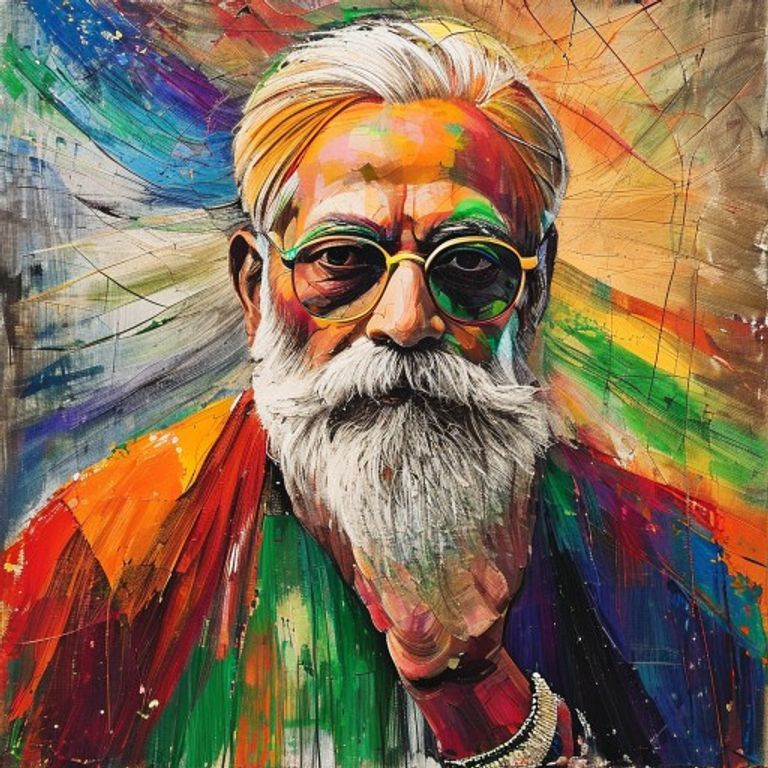
Modi’s Masterstroke: India’s Global Power Play – A Deep Dive into a Nation’s Ascent
In the grand theater of global geopolitics, few narratives are as compelling, as intricate, and as rapidly evolving as India’s ascent. From being perceived as a regional player, India has decisively carved out a space for itself as a formidable global power, a transformation that many attribute to the strategic acumen and unwavering vision of its current leadership. We are witnessing, in real-time, what can only be described as Modi’s Masterstroke: India’s Global Power Play – a multi-faceted, ambitious, and meticulously orchestrated strategy to elevate a civilization to its rightful place on the world stage. But what exactly constitutes this ‘masterstroke’? How has India, under the stewardship of Prime Minister #modi, managed to recalibrate its domestic priorities and international engagements to such profound effect? Let’s embark on an extensive journey to unravel the layers of this fascinating geopolitical saga.
For decades, India, despite its immense potential, cultural richness, and democratic credentials, often played a cautious, sometimes even reticent, role in global affairs. Its foreign policy was characterized by non-alignment, a philosophy born out of post-colonial pragmatism but one that sometimes limited its proactive engagement. Fast forward to today, and the landscape is dramatically different. Under #modi, India has shed its inhibitions, embraced a more assertive posture, and articulated a clear vision for its place in a multipolar world. This isn’t just about economic growth; it’s about a holistic power projection encompassing economic might, strategic partnerships, cultural diplomacy, and a renewed sense of national purpose.
The term ‘masterstroke’ implies not just a single brilliant move, but a series of interconnected, well-timed, and impactful decisions that collectively reshape destiny. In India’s case, this masterstroke is a tapestry woven with threads of economic reform, digital revolution, robust diplomacy, and a reassertion of civilizational pride. It’s a narrative of a nation waking up to its full potential, guided by a leader who understands the intricate dance of international relations and the profound power of domestic transformation. This comprehensive exploration will delve into the economic engines, the diplomatic maneuvers, the cultural outreach, and the underlying philosophy driving India’s global power play, all under the distinctive imprint of #modi’s leadership.
The Visionary Architect: Understanding #Modi’s Approach to Statecraft
To truly grasp India’s global power play, one must first understand the man at its helm. Prime Minister #modi’s approach to statecraft is distinct, characterized by several key pillars that differentiate his tenure from previous administrations. His leadership is often described as decisive, results-oriented, and deeply rooted in a long-term strategic vision for India. This vision isn’t just about incremental progress; it’s about transformative change, about leapfrogging decades of conventional development to position India as a global leader.
One of the most striking aspects of #modi’s leadership is his emphasis on “India First”, a philosophy that prioritizes national interests while simultaneously seeking mutually beneficial international partnerships. This isn’t isolationism; rather, it’s a confident assertion of India’s sovereignty and a clear articulation of its expectations from global engagements. His personal diplomacy, marked by frequent international visits and direct engagement with world leaders, has forged stronger bilateral ties and elevated India’s profile significantly. From tête-à-têtes with US Presidents to candid conversations with European chancellors and Middle Eastern monarchs, #modi has become a recognizable and influential figure on the world stage, often bypassing traditional diplomatic channels to build direct rapport.
Furthermore, #modi has consistently championed a blend of pragmatism and ambition. He recognizes the complex realities of global power dynamics but refuses to let historical constraints or perceived weaknesses dictate India’s trajectory. Instead, he has actively sought to redefine India’s narrative, moving it from a nation grappling with poverty to one aspiring for global leadership in technology, climate action, and economic development. His speeches, both domestically and internationally, often invoke India’s civilizational heritage, its democratic values, and its potential to contribute to global peace and prosperity, thereby framing India’s rise not as a threat, but as a boon to the world.
The concept of “Vasudhaiva Kutumbakam” (The World is One Family), an ancient Indian philosophical tenet, has been frequently invoked by #modi, providing a cultural and ethical underpinning to India’s foreign policy. This isn’t mere rhetoric; it’s a guiding principle that informs India’s approach to humanitarian aid, disaster relief, and its advocacy for the Global South. It signifies a belief that India’s rise is intrinsically linked to global well-being, fostering a sense of shared destiny rather than zero-sum competition. This nuanced approach, combining assertive national interest with a broader humanitarian outlook, is a hallmark of #modi’s foreign policy and a critical component of his masterstroke.
Economic Diplomacy: Fueling the Global Engine
At the heart of any nation’s global power play lies its economic strength. Under #modi, India has undertaken a series of ambitious economic reforms and initiatives designed not just to boost domestic growth but to integrate India more deeply and strategically into the global economy. This economic diplomacy is multifaceted, aiming to transform India into a manufacturing hub, a digital powerhouse, and a magnet for foreign investment.
‘Make in India’ and Atmanirbhar Bharat: The Drive for Self-Reliance
The ‘Make in India’ initiative, launched by #modi in 2014, was a clarion call to transform India into a global manufacturing hub. The premise was simple yet profound: encourage both domestic and international companies to manufacture their products in India, thereby boosting employment, fostering innovation, and enhancing India’s export capabilities. This initiative wasn’t just about attracting foreign direct investment (FDI); it was about building a robust indigenous industrial base.
Complementing ‘Make in India’ is the more recent ‘Atmanirbhar Bharat Abhiyan’ (Self-Reliant India Campaign), unveiled by #modi during the COVID-19 pandemic. While often misinterpreted as protectionism, Atmanirbhar Bharat is a strategic push for resilience and self-sufficiency, particularly in critical sectors. It emphasizes local manufacturing, local supply chains, and reducing undue dependence on single-source imports, especially from geopolitical rivals. This vision, championed by #modi, aims to make India a stronger participant in global supply chains, not by withdrawing from them, but by strengthening its domestic capabilities to contribute more effectively and securely.
The impact has been tangible. Sectors like electronics manufacturing, defense production, and pharmaceuticals have seen significant growth. India is now a major exporter of vaccines and generic drugs, demonstrating its capacity to produce high-quality, affordable goods for global consumption. The Production Linked Incentive (PLI) schemes, introduced under #modi’s government, have further incentivized manufacturing in key sectors, attracting global giants like Apple to expand their production footprint in India, thereby creating jobs and integrating India more deeply into sophisticated global value chains. This strategic economic push is a cornerstone of #modi’s vision for India as a global economic powerhouse.
Digital India and Fintech Revolution: Leapfrogging into the Future
Perhaps one of the most transformative aspects of #modi’s economic vision is the ‘Digital India’ program. Launched with the ambitious goal of transforming India into a digitally empowered society and knowledge economy, Digital India has revolutionized governance, financial inclusion, and public service delivery. The underlying philosophy is that technology, when harnessed effectively, can bridge divides, accelerate development, and empower citizens.
The India Stack, a set of open APIs and digital public goods, is a testament to this vision. At its core are Aadhaar (a unique digital identity), UPI (Unified Payments Interface), and Jan Dhan bank accounts. UPI, in particular, has been a game-changer. It’s a real-time payment system that has democratized digital transactions, allowing even street vendors to accept cashless payments instantly. Its success is unparalleled globally, processing billions of transactions monthly and making India a leader in digital payments innovation. This fintech revolution, actively championed by #modi, has not only brought millions into the formal financial system but has also positioned India as a thought leader in digital public infrastructure, a model many developing nations are now keen to emulate.
The seamless integration of Aadhaar, Jan Dhan, and mobile connectivity has enabled direct benefit transfers, reducing leakages and ensuring that government subsidies reach the intended beneficiaries. This digital transformation, driven by #modi’s government, has created a robust digital economy, fostering startups, innovation, and a new generation of tech-savvy entrepreneurs. It’s a powerful demonstration of how strategic digital infrastructure can underpin economic growth and enhance governance, projecting India’s capabilities far beyond its borders.
Attracting Foreign Investment: Building a Global Business Destination
A key pillar of India’s economic diplomacy under #modi has been the relentless pursuit of foreign investment. Recognizing that capital infusion is crucial for growth and job creation, the government has undertaken significant reforms to improve the ease of doing business in India. This includes simplifying regulations, streamlining bureaucratic processes, and creating a more predictable and investor-friendly policy environment.
The corporate tax cuts, labor reforms, and liberalization of foreign direct investment (FDI) norms in various sectors (including defense, insurance, and retail) have sent a clear signal to global investors: India is open for business. The government has actively engaged with global business leaders, showcasing India’s demographic dividend, its vast consumer market, and its potential as a manufacturing and services hub. The result has been a significant increase in FDI inflows, even during periods of global economic uncertainty.
Prime Minister #modi’s personal efforts in engaging with CEOs and business delegations during his international visits have been instrumental. He has consistently projected India as a stable, democratic, and growth-oriented economy, capable of offering both scale and skilled human resources. This proactive engagement, coupled with structural reforms, has transformed India into one of the most attractive investment destinations globally, a critical component of its economic power play.
Geopolitical Chessboard: Navigating Complex Alliances
Beyond economics, India’s global power play under #modi is characterized by a dynamic and pragmatic foreign policy that deftly navigates a complex geopolitical landscape. India has moved away from rigid ideological stances, embracing multi-alignment and strategic autonomy to protect its interests and contribute to global stability.
Quad and Indo-Pacific Strategy: Securing the Maritime Domain
One of the most significant shifts in India’s foreign policy under #modi has been its increasingly prominent role in the Indo-Pacific region. Recognizing the strategic importance of this vast maritime expanse, particularly in the context of rising Chinese assertiveness, India has deepened its engagement with like-minded democracies.
The Quadrilateral Security Dialogue (Quad) – comprising India, the United States, Japan, and Australia – has emerged as a crucial platform for cooperation on issues ranging from maritime security and counter-terrorism to climate change and vaccine diplomacy. While not a military alliance in the traditional sense, the Quad symbolizes a convergence of interests among democratic powers committed to a free, open, and inclusive Indo-Pacific. #modi has consistently championed India’s role in the Quad, emphasizing its commitment to rules-based international order and freedom of navigation. This strategic alignment allows India to balance its relationships with other major powers while safeguarding its maritime interests and projecting its influence across a vital geopolitical corridor.
India’s broader Indo-Pacific strategy, articulated by #modi, extends beyond the Quad. It involves strengthening bilateral ties with Southeast Asian nations, island states in the Indian Ocean, and engaging in multilateral forums like ASEAN. The focus is on enhancing connectivity, promoting trade, and building capacity for disaster response and maritime domain awareness. This comprehensive approach underscores India’s commitment to being a net security provider in the region, a critical element of its global power projection.
BRICS and Global South Leadership: A Voice for the Developing World
While engaging with Western democracies, India under #modi has also maintained and even strengthened its ties with the Global South and platforms like BRICS (Brazil, Russia, India, China, South Africa). India views BRICS not as an alternative to Western alliances but as a complementary forum to amplify the voices of developing nations and advocate for a more equitable global order.
#modi has consistently used platforms like BRICS, G20, and the UN to champion issues critical to the Global South, including climate justice, sustainable development goals (SDGs), and reform of multilateral institutions. India’s presidency of the G20 in 2023, under #modi’s leadership, was particularly notable for its focus on inclusive growth, digital public infrastructure, and climate finance, successfully bringing the African Union into the G20 as a permanent member. This demonstrated India’s growing influence and its commitment to representing the aspirations of developing countries on the global stage.
India’s balanced approach, engaging with both established and emerging powers, allows it to maintain strategic autonomy and maximize its diplomatic leverage. It positions India as a bridge-builder between different geopolitical blocs, a crucial role in an increasingly fragmented world. This multi-alignment strategy is a testament to the sophistication of #modi’s foreign policy, ensuring India’s relevance across diverse global platforms.
West Asia and Africa Outreach: Deepening Strategic Partnerships
Another significant aspect of #modi’s global power play has been India’s renewed focus on West Asia (Middle East) and Africa. These regions are vital for India’s energy security, trade, and diaspora interests. Under #modi, India has moved beyond transactional relationships to forge deeper, more strategic partnerships.
In West Asia, India has diversified its engagements beyond traditional energy suppliers to include cooperation in technology, defense, and investment. Prime Minister #modi’s visits to countries like Saudi Arabia, UAE, Qatar, and Israel have yielded significant outcomes, including strategic partnerships, investment agreements, and enhanced security cooperation. The India-Middle East-Europe Economic Corridor (IMEC), announced at the G20 summit in Delhi, is a visionary project that could redefine global trade routes, connecting India to Europe via the Middle East, a brainchild of #modi’s forward-thinking diplomacy.
Similarly, Africa has been a priority for #modi’s foreign policy. India has emphasized a partnership approach, focusing on capacity building, technology transfer, and infrastructure development, rather than aid dependency. Through initiatives like the India-Africa Forum Summit, India has committed significant lines of credit and grants for various development projects across the continent. This outreach is driven by a recognition of Africa’s growing economic potential and its geopolitical significance, positioning India as a reliable and trusted partner for African nations. This proactive engagement in crucial regions underscores the comprehensive nature of #modi’s global vision.
Cultural Diplomacy and Soft Power: India’s Enduring Appeal
True global power isn’t solely about economic might or military strength; it’s also about influence, appeal, and the ability to shape narratives. Under #modi, India has significantly amplified its soft power – its ability to attract and persuade through culture, political values, and foreign policies. This cultural diplomacy is a powerful, often understated, element of India’s global power play.
Yoga and Ayurveda Diplomacy: Promoting Ancient Wisdom
Few initiatives have captured global imagination quite like the International Day of Yoga. Spearheaded by Prime Minister #modi, the UN’s adoption of June 21st as International Yoga Day in 2014 was a diplomatic triumph. It transformed an ancient Indian practice into a global phenomenon, celebrated in over 190 countries. This wasn’t just about promoting physical well-being; it was about showcasing India’s rich cultural heritage, its contribution to global health, and its spiritual wisdom.
Similarly, the promotion of Ayurveda and other traditional Indian wellness practices has gained traction globally. India, under #modi, has actively championed the integration of traditional medicine with modern healthcare, advocating for holistic well-being. This ‘wellness diplomacy’ projects India as a source of ancient wisdom relevant to contemporary global challenges, enhancing its cultural footprint and fostering goodwill worldwide. It’s a subtle yet potent way of asserting India’s unique identity and contributions to humanity.
Diaspora Engagement: Ambassadors of a Rising India
India boasts one of the largest and most successful diasporas in the world, spread across every continent. Recognizing their immense potential as cultural ambassadors, economic contributors, and political influencers, #modi has made diaspora engagement a cornerstone of his foreign policy. His large-scale public rallies for the Indian diaspora in cities like New York, London, Sydney, and Dubai have been unprecedented, attracting tens of thousands and generating immense enthusiasm.
These engagements serve multiple purposes: they strengthen the emotional ties between the diaspora and their homeland, encourage investments and remittances, and mobilize their support for India’s interests in their respective host countries. The Indian diaspora, now more connected and empowered than ever, acts as a powerful bridge between India and the world, amplifying India’s voice and influence. #modi’s personal connection with the diaspora has been instrumental in harnessing this soft power asset, turning a demographic reality into a strategic advantage.
India’s Voice on Global Issues: A Responsible Global Actor
Under #modi, India has consistently positioned itself as a responsible global actor, actively contributing to solutions for pressing international challenges. Whether it’s climate change, counter-terrorism, disaster relief, or sustainable development, India’s voice has become increasingly assertive and constructive.
On climate change, India has committed to ambitious renewable energy targets and has championed initiatives like the International Solar Alliance (ISA), a platform for solar-rich countries to collaborate on scaling up solar energy. #modi has consistently advocated for climate justice, emphasizing common but differentiated responsibilities and calling on developed nations to fulfill their financial and technological commitments to developing countries.
In the fight against terrorism, India has been a vocal proponent of a comprehensive global convention against international terrorism and has shared its expertise in counter-terrorism operations. During global crises, such as the COVID-19 pandemic, India’s “Vaccine Maitri” initiative, supplying vaccines to dozens of countries, underscored its commitment to global public health and humanitarian assistance. These actions, driven by #modi’s vision, project India as a compassionate and capable global partner, enhancing its moral authority and soft power.
Challenges and The Road Ahead: Sustaining the Momentum
While India’s global power play under #modi has achieved remarkable successes, it would be naive to ignore the significant challenges that lie ahead. The path to becoming a fully realized global superpower is fraught with internal and external hurdles that require continuous strategic navigation and decisive action.
Domestically, India still grapples with issues such as income inequality, unemployment, particularly among its vast youth population, and the need for further structural reforms in sectors like agriculture and education. Sustained economic growth, coupled with inclusive development, remains paramount to ensure that the benefits of India’s global ascent are shared by all its citizens. Addressing these internal challenges effectively is crucial for maintaining social cohesion and providing a stable foundation for India’s external ambitions. #modi’s government is acutely aware of these issues and has initiated programs like Skill India and various welfare schemes to address them, but the scale of the challenge in a country of 1.4 billion people is immense.
Geopolitically, India faces an increasingly complex and volatile neighborhood. The persistent border disputes with China, the ongoing challenges with Pakistan, and the broader instability in Afghanistan pose significant security concerns. Balancing relations with major powers like the US, Russia, and the EU, while asserting its independent foreign policy, requires constant diplomatic dexterity. India’s ability to maintain its strategic autonomy while forging robust partnerships will be tested repeatedly. The conflict in Ukraine, for instance, has presented India with a delicate balancing act, showcasing #modi’s government’s commitment to multilateralism while prioritizing national interests and energy security.
Furthermore, the global economic environment remains uncertain, with inflationary pressures, supply chain disruptions, and the looming threat of recession in major economies. India’s continued economic growth will depend on its ability to attract sustained foreign investment, boost exports, and insulate its economy from external shocks. The ‘Atmanirbhar Bharat’ vision, championed by #modi, aims to build this resilience, but its success will be measured over the long term.
Despite these challenges, the trajectory set by #modi’s masterstroke appears robust. The foundations for a stronger, more assertive, and globally engaged India have been laid. The focus on infrastructure development, digital transformation, and human capital formation continues to be a priority. India’s demographic dividend, its vibrant democracy, and its growing economic prowess position it uniquely to overcome these hurdles and solidify its place as a leading global power.
Conclusion: A Nation Forging its Destiny
In conclusion, India’s global power play under Prime Minister #modi is far more than a series of isolated policy decisions; it is a grand strategy, a masterstroke orchestrated with precision, vision, and an unyielding belief in India’s potential. From transforming its economic landscape through ‘Make in India’ and the digital revolution to navigating complex geopolitical alliances via the Quad and BRICS, and leveraging its immense soft power through cultural diplomacy and diaspora engagement, India is charting a course that is both ambitious and pragmatic.
The distinctive imprint of #modi’s leadership – characterized by decisiveness, personal diplomacy, and a deep-seated commitment to national interest combined with global welfare – has been instrumental in this transformation. He has not only given India a bolder voice on the international stage but has also instilled a renewed sense of confidence and purpose within the nation itself. India is no longer content to merely react to global events; it is actively shaping them, advocating for a multipolar world where its voice, and the voices of the Global South, are heard and respected.
This journey is not without its difficulties, and the road ahead demands continued vigilance, innovation, and inclusive growth. Yet, the momentum is undeniable. India is emerging as a critical pole in the new world order, a democratic counterweight, an economic engine, and a cultural beacon. The ongoing evolution of India’s global power play is a testament to the fact that #modi’s masterstroke is not just about a temporary surge but about building a sustainable, influential, and responsible global power for generations to come. As the world watches, India, under its current leadership, is not just playing the game; it is redefining it, forging its own destiny, and asserting its rightful place in the annals of global history.