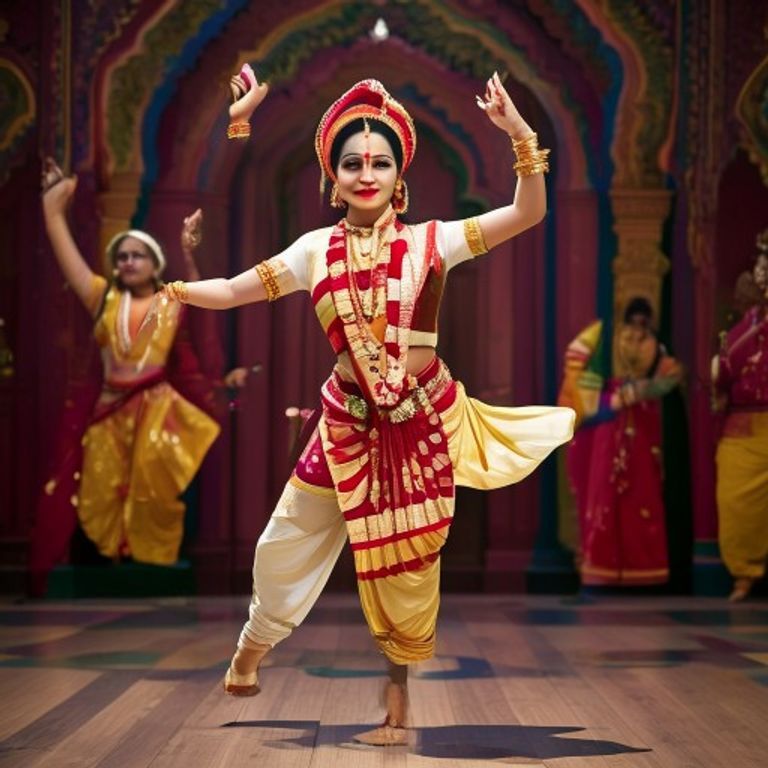
In the vast, swirling ocean of the internet, where bytes of information flood our senses every second, certain phenomena capture collective attention with an almost magnetic force. One such intriguing, and often perplexing, trend that has gripped the Indian digital landscape is the recurring appearance of videos depicting Prime Minister Narendra Modi in various states of what appears to be… well, dancing. The search query, “modi ji ka dance dikhaiye,” has become a testament to public curiosity, a digital whisper echoing through search engines, seeking to uncover the truth behind these captivating clips.
But what is the full story behind these viral moments? Are we witnessing genuine, unscripted instances of a world leader letting loose, or are these cleverly crafted digital illusions, designed to entertain, mislead, or even manipulate? This comprehensive deep dive aims to peel back the layers of digital fabrication, contextualize the cultural impact, and equip you with the knowledge to discern fact from fiction in an increasingly complex online world. Get ready to explore the fascinating, sometimes unsettling, truth behind “Modi Ji Ka Dance.”
The Irresistible Allure of Viral Content: Why “Modi Ji Ka Dance” Spreads Like Wildfire
Before we delve into the specifics of the videos themselves, it’s crucial to understand the ecosystem that allows such content to flourish. The internet, particularly social media platforms, acts as a super-spreader for anything deemed novel, humorous, or controversial. When a public figure of Prime Minister Modi’s stature is involved, the virality factor skyrockets. Why?
- Human Curiosity: We are inherently curious creatures. Seeing a powerful leader, often associated with gravitas and formal demeanor, engaged in something as lighthearted and informal as dancing immediately piques interest. It offers a glimpse behind the curtain, a humanizing moment that resonates with many.
- Humor and Entertainment: Many of these videos, whether genuine or manipulated, are shared for their entertainment value. Laughter is a powerful social connector, and a leader appearing to dance can be seen as amusing, endearing, or even a source of light-hearted satire. People often share these videos with friends, asking, “Have you seen this? You have to modi ji ka dance dikhaiye to everyone!”
- Political Interest and Engagement: In a politically charged environment like India, anything involving a prominent leader quickly becomes a topic of discussion. Supporters might share such videos to showcase a leader’s approachable side, while detractors might use them for satirical or critical purposes.
- The “Unexpected” Factor: The element of surprise is a potent ingredient for virality. When something unexpected happens, especially involving a figure known for a certain public image, it creates a ripple effect across digital networks.
- Ease of Sharing: With a few taps, a video can be shared across WhatsApp, Twitter, Facebook, Instagram, and countless other platforms, reaching millions in mere hours. This frictionless sharing mechanism is the engine of virality.
The quest to “modi ji ka dance dikhaiye” isn’t just about watching a video; it’s about participating in a cultural moment, a digital conversation that spans the spectrum from genuine amusement to critical scrutiny.
Deconstructing the Dance: Fact, Fiction, and the Digital Divide
Now, let’s get to the heart of the matter. The videos circulating under the umbrella of “Modi Ji Ka Dance” are not monolithic. They fall into distinct categories, each requiring a different lens of examination. Understanding these categories is the first step towards uncovering the “pura sach” – the whole truth.
Category 1: Genuine Moments of Spontaneous Movement and Cultural Participation
It’s important to acknowledge that Prime Minister Modi, like any human being, does move, gesture, and occasionally participate in cultural rituals that might involve rhythmic motion. These are rare, often brief, and typically occur in specific contexts. For example:
- Tribal Dance Performances: On visits to tribal communities or during cultural events showcasing India’s diverse heritage, PM Modi has been seen joining in traditional dances for a few steps, often in respectful acknowledgment of the local culture. These are usually dignified, symbolic gestures of participation, not recreational dancing. Such moments are often captured by official media and are verifiable.
- Greeting Children or Crowds: Sometimes, while interacting with children or enthusiastic crowds, a leader might make a small, spontaneous movement – a little step, a sway – that, when taken in isolation or with added music, could be misinterpreted as dancing.
- Religious Ceremonies: Certain religious rituals involve specific movements or steps. If PM Modi participates in such a ceremony, these movements could be misconstrued as dancing, especially by those unfamiliar with the ritual.
The Catch: Even genuine footage can be manipulated. A short, respectful step in a tribal ceremony can be edited, sped up, or set to a peppy Bollywood track, transforming it from a cultural gesture into a “dance performance” in the public eye. When you search for “modi ji ka dance dikhaiye,” you might encounter such videos, which are technically real footage, but presented with a misleading narrative.
Category 2: Cleverly Edited and Miscontextualized Footage
This category forms a significant portion of the “Modi Ji Ka Dance” phenomenon. Here, genuine video clips of PM Modi are taken, but then:
- Music Overlay: A peppy, often humorous, song is added to a video where PM Modi is simply walking, gesturing, or even just standing. The rhythm of the music creates the illusion that his movements are in sync with the beat, making it appear as if he’s dancing.
- Speed Manipulation: Footage might be sped up or slowed down to create an unnatural, dance-like flow to his movements.
- Looping and Repetition: A brief, innocuous movement can be looped repeatedly, making it seem like a sustained dance.
- Out-of-Context Snippets: A leader might be making a specific gesture during a speech or an interaction, which, when clipped and removed from its original context, can be made to look like a dance move.
These edits are often done for satirical purposes or simply for fun. They are not deepfakes in the technological sense, but they are highly misleading. The original footage is real, but the *narrative* created around it is false. This is a common tactic used to generate viral content and often contributes to the “modi ji ka dance dikhaiye” search volume, as people are genuinely confused about the authenticity.
Category 3: The Deepfake Dilemma – AI-Generated “Modi Ji Ka Dance”
This is where the “pura sach” becomes truly complex and, frankly, a bit unsettling. The advent of sophisticated Artificial Intelligence (AI) has ushered in an era of deepfakes – synthetic media where a person in an existing image or video is replaced with someone else’s likeness. In the context of “Modi Ji Ka Dance,” this means:
- Face Swaps: PM Modi’s face can be seamlessly superimposed onto the body of another person who is genuinely dancing. The AI algorithms are so advanced that they can mimic facial expressions, head movements, and even lighting conditions, making the swap incredibly convincing.
- Voice Cloning: While less common for dance videos, deepfake technology can also clone voices, potentially allowing for fabricated audio accompanying fabricated visuals.
- Body Synthesis: Even more advanced AI can generate entirely new body movements, making a static image of PM Modi appear to dance in a completely synthetic video.
The Technology Behind the Illusion: Deepfakes are primarily created using Generative Adversarial Networks (GANs). In simple terms, two neural networks, a “generator” and a “discriminator,” compete against each other. The generator creates fake images/videos, and the discriminator tries to tell if they are real or fake. This adversarial process refines the generator’s ability to create increasingly realistic fakes until the discriminator can no longer tell the difference. The result? A highly convincing, yet entirely fabricated, video that leaves many wondering, “Is this real? Can you really modi ji ka dance dikhaiye that’s authentic?”
These deepfakes can range from harmless humor to malicious disinformation. When they are well-made, they are incredibly difficult for the untrained eye to spot, leading to widespread confusion and often, belief in the fabricated content.
The “Why” Behind the Digital Deception: Motivations for Creating “Modi Ji Ka Dance” Videos
Understanding the categories of these videos leads us naturally to the question: why are they created in the first place? The motivations are as varied as the videos themselves:
- Humor and Satire: A significant portion of these videos are created purely for comedic effect. Political satire has a long history, and deepfakes offer a new, powerful tool for creators to express humor or critique. They can be a way to lighten the mood, mock political figures, or simply entertain.
- Political Commentary and Activism: Some creators use deepfakes or edited videos to make a political statement, highlight perceived contradictions, or express dissent. These can be powerful tools for activism, but they also tread a fine line between commentary and misinformation.
- Misinformation and Disinformation: This is the darker side of the phenomenon. Malicious actors can create deepfakes to spread false narratives, discredit political figures, sow discord, or influence public opinion, especially during election cycles. A convincing “Modi Ji Ka Dance” deepfake, if presented as real, could be used to paint a leader in a negative light or create an embarrassing scenario.
- Technical Experimentation: With AI tools becoming more accessible, many tech enthusiasts and developers experiment with deepfake technology, often using public figures as subjects due to the abundance of their visual data online. These are often created without malicious intent, simply to test the capabilities of the technology.
- Fan-Made Content: Supporters of PM Modi might also create light-hearted, positive “dance” videos (often edited, not deepfakes) to show affection or to portray him in a more relatable, human light.
The motivation often dictates the quality and intent behind the video. While a humorous edit might be easily identifiable, a sophisticated deepfake created for malicious purposes can be a potent weapon in the information war, making the call to “modi ji ka dance dikhaiye” fraught with potential peril.
The Far-Reaching Impact: Erosion of Trust and the Media Literacy Crisis
The proliferation of deepfakes and manipulated content, including “Modi Ji Ka Dance” videos, has profound implications for society, democracy, and our ability to discern truth:
- Erosion of Public Trust: When we can no longer trust what our eyes and ears tell us, the foundation of public trust in media, leaders, and institutions begins to crumble. This skepticism, while sometimes healthy, can also lead to cynicism and an inability to believe even genuine information.
- Damage to Reputation: Deepfakes can be used to fabricate embarrassing, scandalous, or incriminating scenarios, potentially destroying a person’s reputation, career, or public image. For a leader like PM Modi, even a seemingly innocuous “dance” video, if widely believed to be real and out of character, could be used to undermine his image of gravitas and leadership.
- Political Polarization and Instability: In an already polarized political landscape, deepfakes can exacerbate divisions by creating false narratives that confirm existing biases. They can be used to incite anger, spread rumors, and even influence election outcomes, posing a direct threat to democratic processes.
- Media Literacy Crisis: The rise of sophisticated synthetic media highlights a critical gap in public education: media literacy. Most people are not equipped with the tools or knowledge to critically evaluate the deluge of digital content they encounter daily. The innocent search for “modi ji ka dance dikhaiye” can inadvertently lead users down a rabbit hole of misinformation.
- Legal and Ethical Dilemmas: Who is responsible when a deepfake causes harm? What are the legal ramifications for creators and disseminators? These are complex questions that legal frameworks are still struggling to address, especially across international borders.
The challenge is not just about identifying a fake video; it’s about safeguarding the very fabric of our shared reality and ensuring that informed decisions can be made in a world awash with digital illusions.
Becoming a Digital Detective: How to Spot a Deepfake or Manipulated Video
In this era of digital uncertainty, every internet user must become a digital detective. While AI detection tools are emerging, the most powerful tool remains critical thinking. Here’s how you can approach a video, especially one that claims to “modi ji ka dance dikhaiye,” with a healthy dose of skepticism:
1. Scrutinize the Visuals: The Devil is in the Details
- Unnatural Movements: Look for jerky, unnatural, or robotic movements, especially around the face, neck, and shoulders. Does the head seem to float or move independently of the body?
-
Facial Anomalies:
- Blurriness or Pixelation: The swapped face might be slightly blurrier or have different pixelation than the rest of the video.
- Inconsistent Skin Tone/Lighting: Does the skin tone or lighting on the face match the rest of the body and the surrounding environment?
- Unusual Blinking Patterns: Deepfake subjects sometimes have irregular blinking patterns – too frequent, too infrequent, or unnatural.
- Lack of Emotion: The facial expressions might seem flat, detached, or not quite align with the context of the video.
- Mouth and Teeth: Look for strange mouth shapes, unnatural teeth, or inconsistencies when the person speaks (if applicable).
- Distorted Backgrounds or Objects: Sometimes, the AI struggles with complex backgrounds or objects near the swapped face, leading to distortions or flickering.
- Edge Artifacts: Look for subtle lines, halos, or blurred edges around the swapped face, indicating a digital manipulation.
2. Analyze the Audio: Does it Sound Right?
- Audio-Visual Synchronization: If the person is speaking, check if the lip movements perfectly sync with the audio. Slight delays or mismatches are red flags.
- Unnatural Voice: Listen for unusual voice tones, inflections, or robotic qualities, especially if it’s a voice clone.
- Background Noise: Inconsistent background noise or a sudden change in audio quality can indicate manipulation.
3. Context is King: Question Everything Else
- Verify the Source: Where did the video originate? Is it from a reputable news organization, an official government channel, or an anonymous social media account? Be extremely wary of content from unknown or suspicious sources.
- Cross-Reference with Credible News: Has this event been reported by multiple, trusted news outlets? If a major leader is genuinely dancing, it would likely be a significant news item.
- Consider the Context of the Event: Does the “dance” fit the occasion? Is it a formal diplomatic event, a political rally, or a casual gathering? A leader’s behavior is usually consistent with the formality of the event.
- Check for Disclaimers: Reputable satirical channels often include disclaimers that their content is fabricated for humor.
- Reverse Image/Video Search: Tools like Google Reverse Image Search or InVID-WeVerify can help you trace the origin of a video or image, find earlier versions, or identify if it has been used in other contexts.
- Think Before You Share: The most crucial step. If you’re unsure about a video’s authenticity, refrain from sharing it. Spreading misinformation, even inadvertently, contributes to the problem.
By applying these critical thinking techniques, you can move beyond simply wanting to “modi ji ka dance dikhaiye” and instead become an informed consumer of digital media, capable of discerning the true from the false.
The Broader Canvas: Political Leaders, Public Persona, and Dance in India
To fully appreciate the “Modi Ji Ka Dance” phenomenon, it’s helpful to understand the cultural and political context of India. Unlike some Western leaders who might occasionally break into a dance move at public events or on talk shows, Indian political leaders, especially those in high office, typically maintain a more formal and dignified public persona.
- Gravity of Office: The office of the Prime Minister of India carries immense gravity and responsibility. Public appearances are generally meticulously planned, and spontaneous, recreational dancing is rarely part of the script.
- Cultural Significance of Dance: While India is a land rich in diverse dance forms, from classical to folk, these are often associated with specific traditions, rituals, or artistic performances. Casual, spontaneous “dancing” by a leader in a public, non-cultural context is not a common expectation. Participation in traditional tribal dances, as mentioned, is an act of cultural respect, not a recreational performance.
- Perception of Leadership: Indian society often expects its leaders to exude seriousness, wisdom, and a strong sense of purpose. A leader engaging in what might be perceived as frivolous activity could, for some, undermine that image, while for others, it might humanize them. This dichotomy makes “Modi Ji Ka Dance” videos particularly potent, as they play into these contrasting expectations.
- Social Media’s Role in Humanizing Leaders: Despite traditional expectations, social media has a way of breaking down barriers. People crave to see the “human” side of their leaders. This desire fuels the creation and consumption of content that aims to show leaders in more relatable, informal settings, whether those portrayals are real or fabricated.
Therefore, when a video surfaces claiming to “modi ji ka dance dikhaiye,” it inherently challenges established norms and expectations, making it even more compelling and worthy of scrutiny.
The Future Landscape: An Ongoing Battle for Truth
The challenge of deepfakes and manipulated media is not going away. As AI technology continues to advance, creating synthetic media will become even easier and more realistic. This means the battle for truth in the digital realm will only intensify.
- Technological Arms Race: While deepfake creation tools are improving, so are detection tools. AI is being used to fight AI, with researchers developing algorithms to identify the subtle tells of synthetic media.
- Platform Responsibility: Social media companies are under increasing pressure to develop robust mechanisms for identifying, labeling, and removing deepfakes and misinformation. Their role in moderating content will be crucial.
- Legislative Action: Governments worldwide are beginning to grapple with the legal implications of deepfakes, considering laws related to their creation, dissemination, and the harm they cause.
- Continuous Education: The most sustainable solution lies in empowering individuals. Ongoing education in media literacy, critical thinking, and digital citizenship is paramount to creating an informed populace resilient to misinformation.
The next time you see a video that makes you question, “Can you really modi ji ka dance dikhaiye that’s truly authentic?”, remember that your ability to critically evaluate is your strongest defense.
Conclusion: Beyond the Dance, Towards Digital Wisdom
The viral phenomenon of “Modi Ji Ka Dance” videos is far more than just a collection of amusing clips. It’s a microcosm of the larger challenges facing our digital society: the struggle between genuine information and sophisticated deception, the power of virality, and the urgent need for critical media literacy. While some videos might capture fleeting, authentic moments of a leader’s spontaneity, the vast majority are either cleverly edited, taken out of context, or, increasingly, entirely fabricated using advanced AI.
The innocent search for “modi ji ka dance dikhaiye” can lead to a rabbit hole of misinformation if not approached with caution. As digital citizens, we bear a collective responsibility to question, verify, and think before we share. Let us not be mere passive consumers of content, but active, discerning participants in the digital conversation. By understanding the mechanisms of manipulation and equipping ourselves with the tools of critical analysis, we can navigate the complex currents of the internet, ensuring that truth, not illusion, guides our understanding of the world and its leaders. The real dance, perhaps, is the one we perform daily, balancing curiosity with skepticism, and entertainment with enlightenment, in our quest for the unvarnished truth.