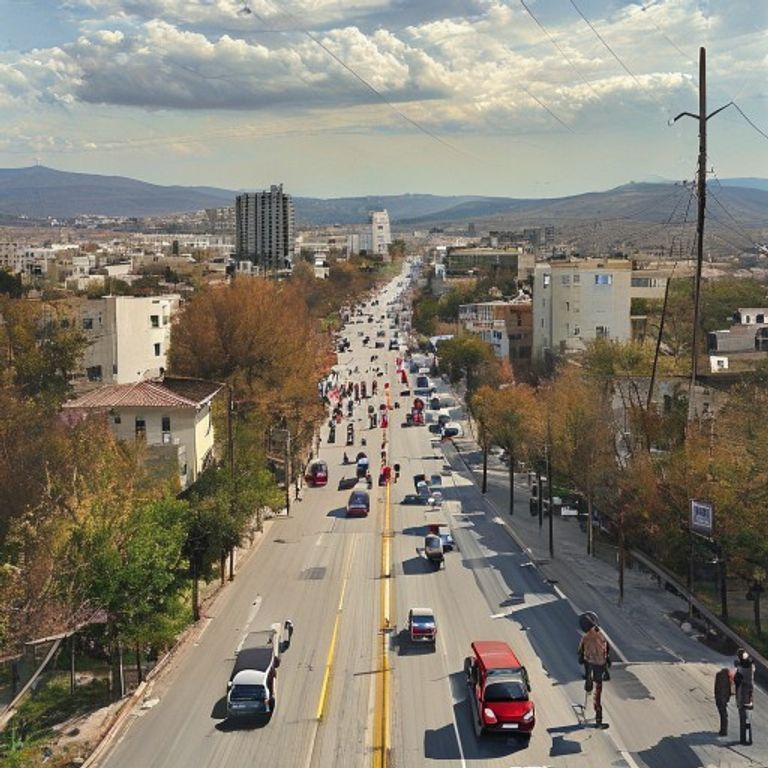
Armenia’s Crossroads: Unpacking Today’s Urgent News
There are places on Earth where history isn’t just a subject studied in textbooks; it’s a living, breathing force that shapes every sunrise and sunset. Armenia is one such place. Perched precariously at the crossroads of empires, religions, and civilizations, this ancient nation has long been a crucible of human drama, resilience, and often, profound tragedy. Today, more than ever, Armenia finds itself at a critical juncture, navigating a labyrinth of geopolitical complexities, existential threats, and the weight of a recent, devastating past. To truly understand the headlines, to grasp the gravity of the latest armenian news, one must delve deeper than the surface, exploring the historical currents, the regional power plays, and the indomitable spirit of a nation fighting for its very survival.
This isn’t just another blog post; it’s an invitation to embark on a comprehensive journey into the heart of Armenia’s current predicament. We’ll unpack the urgent news, dissect the intricate web of relationships, and explore what it means to be Armenian in an increasingly volatile world. From the recent catastrophic events in Nagorno-Karabakh to the delicate dance of international diplomacy, we will leave no stone unturned. So, let’s dive in, because the story of Armenia is not just about a small country in the South Caucasus; it’s a testament to the enduring human struggle for justice, self-determination, and peace.
The Weight of History: A Nation Forged in Fire
To comprehend today’s armenian news, we must first acknowledge the profound historical context that underpins every current event. Armenia holds the distinction of being the first nation to adopt Christianity as its state religion in 301 AD, a decision that has profoundly shaped its identity and cultural trajectory. This ancient heritage, rich in art, literature, and architectural marvels, stands in stark contrast to the continuous struggles for sovereignty and survival against larger, often hostile, neighbors.
The 20th century, in particular, cast a long, dark shadow over the Armenian people. The Armenian Genocide of 1915-1923, perpetrated by the Ottoman Empire, saw the systematic extermination of an estimated 1.5 million Armenians. This horrific event, still denied by Turkey, is not merely a historical footnote; it is a raw, open wound that deeply informs Armenian national consciousness, fostering a profound sense of vulnerability and a fierce determination to never again allow such atrocities to occur. The trauma of the genocide is etched into the collective memory, influencing political decisions, foreign policy, and the very psyche of the nation. It’s a constant reminder of the consequences of international indifference and the imperative of self-preservation.
Following a brief period of independence after World War I, Armenia was forcibly incorporated into the Soviet Union in 1920. While the Soviet era brought a degree of stability and modernization, it also suppressed national aspirations and artificially drew borders that would sow the seeds of future conflict. One of the most significant legacies of this period was the contested region of Nagorno-Karabakh (Artsakh), a historically Armenian-inhabited enclave that was placed under the administrative control of Soviet Azerbaijan. This decision, made by Joseph Stalin, was a ticking time bomb, destined to detonate with the collapse of the Soviet Union.
When Armenia regained its independence in 1991, it immediately faced the eruption of the Nagorno-Karabakh conflict. Armenians in Artsakh, fearing ethnic cleansing under Azerbaijani rule, declared independence and sought unification with Armenia. This led to the First Nagorno-Karabakh War (1988-1994), a brutal conflict that resulted in tens of thousands of casualties and the displacement of hundreds of thousands. Armenia, with the support of the local Karabakh Armenian forces, emerged victorious, establishing de facto control over Nagorno-Karabakh and surrounding territories. A fragile ceasefire was signed in 1994, but it never evolved into a comprehensive peace treaty, leaving the core issues unresolved and setting the stage for future hostilities. This unresolved status, constantly highlighted in armenian news cycles, became a persistent source of tension and a focus for international diplomatic efforts that ultimately proved insufficient.
The Nagorno-Karabakh Conflict: A Deep Dive into the Core Issue
The Nagorno-Karabakh conflict is not just a territorial dispute; it is a complex ethno-political struggle with deep historical roots, profound humanitarian consequences, and significant geopolitical ramifications. Its resurgence in recent years has dominated armenian news and captured international attention, albeit often belatedly.
The 2020 War: A Turning Point
For decades, the 1994 ceasefire held, albeit with sporadic violations. However, Azerbaijan, emboldened by its growing oil and gas revenues, a significant military buildup, and unwavering support from Turkey, meticulously prepared for a large-scale military offensive. On September 27, 2020, Azerbaijan launched a full-scale assault on Nagorno-Karabakh, marking the beginning of the Second Nagorno-Karabakh War, also known as the 44-day war.
The war was characterized by the extensive use of modern weaponry, particularly advanced drones (UAVs) supplied by Turkey and Israel, which proved devastatingly effective against Armenia’s and Artsakh’s older, Soviet-era defenses. Turkish military advisors and Syrian mercenaries also played a significant role in supporting Azerbaijani forces. The conflict was asymmetrical, with Azerbaijan possessing a substantial numerical and technological advantage. The sheer scale and intensity of the fighting overwhelmed the Armenian defenders, despite their valiant resistance.
The humanitarian impact was catastrophic. Thousands of soldiers on both sides were killed, and countless civilians were displaced from their homes. Cities and towns were shelled, and critical infrastructure was damaged. The world watched, largely ineffectually, as the conflict unfolded, with only Russia eventually stepping in to broker a ceasefire agreement on November 9, 2020.
The terms of the Russian-brokered agreement were harsh for Armenia. It mandated the withdrawal of Armenian forces from significant territories surrounding Nagorno-Karabakh that had been under Armenian control since 1994. Russian peacekeepers were deployed to monitor the ceasefire and secure the Lachin Corridor, the sole remaining road connecting Armenia to Nagorno-Karabakh. While the agreement halted the immediate fighting, it left Nagorno-Karabakh severely diminished in size and isolated, its future uncertain and its Armenian population vulnerable. This was a seismic shift in the regional balance of power, constantly reflected in the grim updates of armenian news.
Post-2020 Dynamics and the Blockade of Artsakh
The period following the 2020 war was anything but peaceful. Azerbaijan continued to exert pressure, engaging in regular border skirmishes, capturing Armenian servicemen, and making aggressive territorial demands. The most egregious act, however, began in December 2022, when Azerbaijan initiated a blockade of the Lachin Corridor, ostensibly for environmental reasons. This vital lifeline, guaranteed by the 2020 ceasefire agreement, was completely shut off, effectively isolating the 120,000 Armenian residents of Nagorno-Karabakh from Armenia and the outside world.
The blockade quickly spiraled into a full-blown humanitarian crisis. Food, medicine, fuel, and other essential supplies dwindled. Hospitals struggled to operate, children were separated from their families, and the entire population faced starvation and a severe lack of medical care. Despite repeated calls from the international community, including the International Court of Justice (ICJ) ordering Azerbaijan to unblock the corridor, Azerbaijan ignored these demands. The world’s response was largely limited to rhetorical condemnations, illustrating a disheartening failure of international mechanisms to protect a vulnerable population.
The September 2023 Offensive and the Ethnic Cleansing of Artsakh
The culmination of this systematic pressure and international inaction came on September 19, 2023. While the world’s attention was largely focused elsewhere, Azerbaijan launched another large-scale military offensive against Nagorno-Karabakh. The remaining Armenian defense forces, weakened and isolated by the blockade, were quickly overwhelmed. Within 24 hours, facing an existential threat and the prospect of a complete massacre, the Artsakh authorities were forced to agree to a ceasefire on Azerbaijan’s terms, effectively capitulating.
The consequences were immediate and devastating. The Armenian population of Nagorno-Karabakh, facing an imminent threat of violence, persecution, and ethnic cleansing under Azerbaijani rule, began a mass exodus. Over 100,000 Armenians – virtually the entire population – fled their ancestral homes, crossing into Armenia as refugees. This forced displacement, widely condemned as ethnic cleansing by international observers and human rights organizations, marked the tragic end of an Armenian presence in Nagorno-Karabakh that spanned millennia. The images of endless convoys of cars carrying desperate families, their lives reduced to what they could fit in a vehicle, dominated armenian news and shocked those who paid attention. The fall of Artsakh was not just a territorial loss; it was the erasure of a vibrant Armenian community and a profound blow to the Armenian nation.
Geopolitical Chessboard: Regional and International Players
Armenia’s precarious position is exacerbated by its location in a highly complex and volatile geopolitical region. The country is a pawn in a larger game played by regional and global powers, each with their own interests and agendas. Understanding these dynamics is crucial for interpreting any piece of armenian news.
Russia’s Evolving Role: A Shifting Alliance
Historically, Russia has been Armenia’s primary security guarantor and strategic ally. It maintains a military base in Armenia and is the dominant power in the Collective Security Treaty Organization (CSTO), a military alliance of several post-Soviet states, of which Armenia is a member. Russia’s intervention in 2020, leading to the ceasefire and deployment of peacekeepers, was seen as preventing a complete collapse of Artsakh’s defenses.
However, Russia’s reliability as an ally has been severely questioned, especially in the wake of its full-scale invasion of Ukraine. With its resources and attention diverted to the Ukrainian war, Russia’s ability and willingness to protect Armenia have diminished. During the 2023 Azerbaijani offensive against Artsakh and the earlier blockade, Russian peacekeepers stood by, unable or unwilling to prevent the humanitarian catastrophe and the forced displacement. This perceived abandonment has led to significant disillusionment within Armenia, prompting a re-evaluation of its foreign policy and security alliances. The complex and often contradictory signals from Moscow are a constant feature of armenian news analysis.
Turkey’s Assertive Stance: Neo-Ottoman Ambitions
Turkey’s role in the South Caucasus is deeply intertwined with its historical animosity towards Armenia and its strong ethno-linguistic ties with Azerbaijan. Turkey was Azerbaijan’s staunchest supporter during both the 2020 and 2023 conflicts, providing military hardware, training, and political backing. Turkey’s foreign policy under President Erdoğan has been characterized by an assertive, often aggressive, pursuit of regional influence, sometimes termed “Neo-Ottomanism.”
For Armenia, Turkey represents an existential threat, particularly given its historical role in the Armenian Genocide and its continued blockade of Armenia’s borders since the early 1990s. Turkey openly advocates for a “Zangezur corridor” through Armenia’s southern Syunik province, a demand that Armenia views as a severe violation of its sovereignty and territorial integrity. This persistent pressure from Turkey and Azerbaijan is a constant source of anxiety and a recurring theme in any discussion of urgent armenian news.
Iran’s Strategic Interests: A Balancing Act
Iran shares a long border with Armenia and Azerbaijan, making it a crucial regional player. While Iran is predominantly Shia Muslim, like Azerbaijan, it has maintained relatively good relations with Christian Armenia, primarily due to strategic calculations. Iran is deeply concerned by the growing Turkish and Azerbaijani influence in the South Caucasus, particularly the prospect of a “Zangezur corridor” that would cut off its border with Armenia and potentially disrupt its trade routes to Europe. Such a corridor would also strengthen a pan-Turkic axis that Tehran views as a threat to its own national security and regional standing.
Iran has consistently voiced support for Armenia’s territorial integrity and has warned against any changes to international borders by force. This makes Iran an unexpected, yet significant, partner for Armenia in certain aspects. The delicate balance Iran strikes in the region is often reflected in the nuanced reporting of armenian news.
The West (EU & US): Limited Leverage and Conflicting Priorities
The European Union and the United States have generally expressed concern over the escalating tensions and humanitarian crises in the South Caucasus. They have provided humanitarian aid to Armenia, called for dialogue, and engaged in mediation efforts. High-level meetings have been held in Brussels and Washington, attempting to facilitate a peace treaty between Armenia and Azerbaijan.
However, the West’s influence in the region has been limited, particularly compared to Russia and Turkey. European nations are heavily reliant on Azerbaijani oil and gas, which has often muted their criticism of Baku’s aggressive actions. The US, while advocating for democratic values and human rights, has also struggled to exert decisive leverage. The lack of robust sanctions against Azerbaijan, despite its violations of international law and humanitarian norms, has been a point of significant frustration for Armenia and its diaspora. The West’s struggle to balance geopolitical interests with moral imperatives is a recurring theme in the analysis of armenian news.
The Armenian Diaspora: A Global Advocate
The global Armenian diaspora, numbering millions across Europe, the Americas, and the Middle East, plays a vital role in raising awareness, lobbying governments, and providing financial and humanitarian support to Armenia. They are a powerful voice against injustice and a crucial link for informing the world about urgent armenian news. Their advocacy efforts, while impactful, often face an uphill battle against the realpolitik of international relations.
Armenia’s Internal Challenges and Opportunities
Beyond the external pressures, Armenia faces significant internal challenges that compound its precarious situation. Yet, amidst these difficulties, there are also opportunities for reform, resilience, and a reorientation towards a more secure future.
Political Landscape: Navigating Discontent and Reform
Prime Minister Nikol Pashinyan came to power in 2018 on a wave of democratic reforms, promising to fight corruption and strengthen democratic institutions. However, the defeat in the 2020 Nagorno-Karabakh war and the subsequent loss of Artsakh in 2023 have severely tested his government’s legitimacy and popular support. There is widespread public discontent, protests, and calls for accountability, particularly regarding the handling of the conflicts.
Pashinyan’s government is now attempting to navigate a treacherous path: pursuing democratic reforms while simultaneously confronting existential security threats. The need for national unity is paramount, yet political divisions remain sharp. The government’s efforts to pivot Armenia’s foreign policy away from its traditional reliance on Russia towards closer ties with the West are met with both hope and skepticism, constantly debated in the local armenian news.
Economic Pressures: The Cost of Conflict and Blockades
Armenia’s economy has been profoundly impacted by decades of conflict and regional blockades. Its borders with Turkey and Azerbaijan remain closed, severely limiting trade routes and economic development. The influx of over 100,000 refugees from Artsakh in a short period has placed immense strain on the country’s limited resources, requiring urgent housing, employment, and social services. This humanitarian crisis, often overlooked, is a significant internal challenge for Armenia.
The country is heavily reliant on remittances from its diaspora and trade with Russia. There is an urgent need for economic diversification, attracting foreign direct investment, and developing new trade routes and partnerships. The government is exploring projects like the “Crossroads of Peace” initiative, proposing open communication lines and infrastructure development in the region, but these are contingent on a fragile peace and regional cooperation that remains elusive. Economic forecasts and discussions about resilience are always central to any armenian news analysis.
Societal Trauma and Resilience: The Unbreakable Spirit
The Armenian people have endured immense trauma – the genocide, multiple wars, and now the forced displacement of an entire population from their ancestral lands. Yet, throughout history, they have demonstrated extraordinary resilience, a deep commitment to their culture, language, and faith, and an unwavering spirit of survival. The current influx of Artsakh Armenians is not just a humanitarian crisis; it’s a profound societal challenge to integrate these displaced communities while preserving their identity and addressing their profound loss.
The national discourse is often characterized by a profound sense of injustice and a search for accountability. Despite the pain, there is also a palpable determination to rebuild, to strengthen Armenia, and to ensure that the nation endures. This blend of sorrow and resolve is a defining characteristic of Armenia today, frequently highlighted in personal stories shared through armenian news outlets.
Shifting Foreign Policy: A Search for New Alliances
The perceived failure of Russia and the CSTO to protect Armenia has prompted a significant re-evaluation of its foreign policy. Armenia is actively seeking to diversify its security partnerships, exploring closer ties with Western powers like France and the United States, as well as emerging global players like India. Military cooperation with France and India, including arms purchases, signifies a deliberate attempt to reduce dependence on Russia and bolster its defensive capabilities.
Armenia is also deepening its engagement with the European Union, seeking closer political and economic integration. This pivot is a delicate balancing act, as Armenia must avoid provoking Russia while simultaneously seeking viable alternatives for its security and economic development. The future trajectory of Armenia’s foreign policy is one of the most critical and frequently discussed topics in contemporary armenian news.
Unpacking Today’s Urgent News: Specifics and Future Outlook
Let’s hone in on the most pressing issues dominating the headlines and shaping Armenia’s immediate future.
The Aftermath of Artsakh’s Fall: A Humanitarian and Political Imperative
The forced displacement of over 100,000 Armenians from Nagorno-Karabakh in September 2023 is not merely a historical event; it is an ongoing humanitarian crisis. The urgent need to provide housing, employment, healthcare, and psychological support for these refugees is paramount. The international community has a moral obligation to assist Armenia in this monumental task, ensuring that these individuals, who lost everything, are able to rebuild their lives.
Beyond the immediate humanitarian concerns, there is the critical issue of accountability. The ethnic cleansing of Artsakh must not go unpunished. International bodies must investigate and hold perpetrators accountable for war crimes and crimes against humanity. Furthermore, the systematic destruction of Armenian cultural and religious heritage in Nagorno-Karabakh by Azerbaijan is a grave concern, requiring monitoring and protection by UNESCO and other relevant organizations. This ongoing tragedy and the calls for justice are a constant feature of global armenian news reporting.
Border Demarcation and Delimitation: A Volatile Frontier
One of the most immediate and dangerous challenges facing Armenia is the ongoing process of border demarcation and delimitation with Azerbaijan. Since the 2020 war, Azerbaijani forces have advanced into sovereign Armenian territory in several areas, creating a highly volatile situation. Azerbaijan continues to make demands for Armenian villages and territories, often citing Soviet-era maps, which Armenia views as illegal encroachments and violations of its territorial integrity.
The lack of clearly defined and internationally recognized borders is a constant source of tension, leading to frequent skirmishes and the risk of further escalation. A just and mutually agreed-upon demarcation, based on international law and principles, is essential for any long-term stability. The daily updates on border incidents and diplomatic negotiations are a grim staple of armenian news.
The Zangezur Corridor: A Red Line for Armenia and Iran
Azerbaijan, with strong backing from Turkey, continues to insist on the establishment of an extraterritorial “Zangezur corridor” through Armenia’s southern Syunik province, connecting Azerbaijan proper to its Nakhchivan exclave. Armenia vehemently rejects any extraterritorial status, viewing it as a blatant violation of its sovereignty and a direct threat to its territorial integrity. Armenia has proposed alternative transit routes that would respect its sovereignty, offering to open existing roads under its control, but Azerbaijan has largely rejected these proposals.
The Zangezur corridor is not just a logistical issue; it has profound geopolitical implications. It would sever Armenia’s direct border with Iran, creating a continuous land bridge for Turkey to reach Central Asia, aligning with pan-Turkic ambitions. Iran views this prospect with extreme concern, as it would disrupt its trade routes with Armenia and Europe, and potentially lead to an increased presence of Turkish and Azerbaijani forces on its borders. The standoff over the Zangezur corridor remains one of the most dangerous flashpoints in the region, frequently highlighted in urgent armenian news analyses.
Peace Treaty Negotiations: A Rocky Path to Reconciliation
Despite the ongoing tensions and the traumatic events of 2023, Armenia and Azerbaijan are ostensibly engaged in negotiations for a comprehensive peace treaty. The sticking points are numerous and complex:
- Border Demarcation: As discussed, this remains a highly contentious issue.
- Enclaves: Azerbaijan demands the return of several small Azerbaijani enclaves within Armenia, while Armenia has its own exclave within Azerbaijan (Artsvashen) which it demands back.
- Prisoners of War: The issue of Armenian prisoners of war still held by Azerbaijan remains a significant humanitarian and political concern.
- Cultural Heritage: Guaranteeing the protection of Armenian cultural and religious sites in territories now under Azerbaijani control is paramount, given documented instances of destruction and desecration.
- Security Guarantees: Armenia seeks robust international security guarantees to ensure its long-term safety and sovereignty.
- Return of Refugees: The right of return for Armenians to Nagorno-Karabakh, though currently unrealistic, remains a principled demand.
International mediators from the EU, US, and Russia have attempted to facilitate these talks, but progress has been slow and often overshadowed by continued Azerbaijani aggression. The prospects for a lasting and just peace remain uncertain, with many observers fearing that Azerbaijan’s ultimate goal is to completely subjugate Armenia. Any progress or setback in these talks immediately becomes headline armenian news.
Armenia’s Search for New Security Alliances: A Strategic Imperative
The perceived failure of the CSTO to protect Armenia has accelerated its pivot towards new security partnerships. Armenia has engaged in high-level discussions with France, a vocal supporter of Armenia’s sovereignty, leading to agreements on military cooperation and arms sales. Similarly, India has emerged as a significant partner, with Armenia purchasing advanced weaponry from New Delhi. These moves signify a strategic imperative to diversify its defense capabilities and reduce its over-reliance on Russia.
Armenia is also exploring deeper ties with the European Union, potentially through enhanced partnership agreements and increased economic integration. While full EU or NATO membership is not on the immediate horizon, strengthening these relationships offers a crucial counterbalance to regional threats and provides a pathway for democratic and economic development. This strategic reorientation is a monumental undertaking, fraught with challenges, but seen as essential for Armenia’s long-term survival, and it’s a constant topic in analytical armenian news.
Actionable Advice & How to Stay Informed
Given the urgency and complexity of Armenia’s situation, what can be done, and how can individuals stay genuinely informed?
For the Global Community: Stand with Armenia
- Advocacy and Awareness: Speak out, write to your elected officials, and engage on social media to raise awareness about the humanitarian crisis, the ethnic cleansing of Artsakh, and the ongoing threats to Armenia’s sovereignty. Share reliable armenian news.
- Support Humanitarian Efforts: Donate to reputable organizations providing aid to displaced Artsakh Armenians and vulnerable communities in Armenia. Organizations like the Armenia Fund, Armenian General Benevolent Union (AGBU), and various church-affiliated charities are doing critical work.
- Demand Accountability: Pressure your governments to demand accountability from Azerbaijan for its actions, including violations of international law, destruction of cultural heritage, and disregard for international court rulings. Advocate for targeted sanctions where appropriate.
- Encourage Balanced Reporting: Support and share media outlets that provide nuanced, factual, and ethical reporting on the conflict, pushing back against disinformation and propaganda.
For Armenians (Diaspora & Armenia): Unity and Resilience
- Foster Unity: Despite political differences, national unity is paramount in the face of existential threats. Focus on common goals: strengthening the state, protecting sovereignty, and preserving heritage.
- Invest in Armenia: For the diaspora, consider investing in Armenia’s economy, supporting local businesses, and contributing to its long-term development.
- Preserve Culture and Identity: Continue to uphold and promote Armenian language, culture, history, and faith, especially for the younger generations. This cultural resilience is a cornerstone of national survival.
- Vigilance and Critical Thinking: Be discerning consumers of information. Seek out diverse sources of armenian news, including direct sources from Armenia, and critically evaluate narratives.
How to Stay Informed: Reliable Sources are Key
- Reputable News Agencies: Follow established international news organizations known for their journalistic integrity (e.g., Reuters, AP, BBC, The Guardian, New York Times, Washington Post) and cross-reference their reporting on Armenia.
- Specialized Regional Outlets: Look for regional expertise from outlets like RFE/RL’s Armenian Service (Azatutyun), CivilNet, EVN Report, and Armenian Weekly. These often provide in-depth analysis and local perspectives on armenian news.
- Think Tanks and Academic Analyses: Consult reports and analyses from respected think tanks (e.g., Carnegie Endowment, Council on Foreign Relations, Chatham House) and academic institutions specializing in the South Caucasus.
- Human Rights Organizations: Follow reports from Human Rights Watch, Amnesty International, and the International Crisis Group for assessments of human rights and conflict dynamics.
- Official Statements: Pay attention to official statements from the Armenian government, as well as relevant international bodies like the UN, EU, and OSCE, but always cross-reference.
Conclusion: The Enduring Spirit of Armenia at the Crossroads
Armenia stands at a profound crossroads, grappling with the devastating aftermath of recent conflicts, navigating complex geopolitical currents, and fighting for its very existence. The urgent armenian news of today paints a picture of a nation under immense pressure, facing existential threats to its sovereignty and territorial integrity. The forced displacement of Armenians from Artsakh is a tragic testament to the failures of international diplomacy and the brutal realities of regional power politics.
Yet, amidst this daunting landscape, the spirit of Armenia endures. It is a spirit forged in millennia of history, tempered by adversity, and sustained by an unwavering commitment to identity, culture, and self-determination. The challenges are immense, but so too is the resilience of the Armenian people. Their pivot towards new alliances, their efforts to strengthen democratic institutions, and their continuous fight for justice are testaments to a nation determined to secure its future.
To truly understand Armenia’s crossroads is to understand that its fate is not merely an isolated regional concern; it is a barometer for international justice, human rights, and the efficacy of global institutions. The world must not turn a blind eye. By staying informed, advocating for justice, and supporting the Armenian people, we can collectively contribute to a more secure and peaceful future for this ancient nation. The story of Armenia is far from over, and its next chapter will be written by the choices made today, both within its borders and across the globe.